
On September 21, CECEP held its 2026 emergency drill and environmental training session for sudden ecological and environmental incidents in the water business in Nancheng County, Jiangxi Province. The event was jointly hosted by the Group and the Nancheng County Government and co-organized by CECEP Jiangxi Company, the Nancheng County Ecology and Environment Bureau, and the Nancheng County Industrial Park Management Committee. Du Le, deputy general manager of the Group, attended the event, observed and guided the entire drill, and delivered remarks.
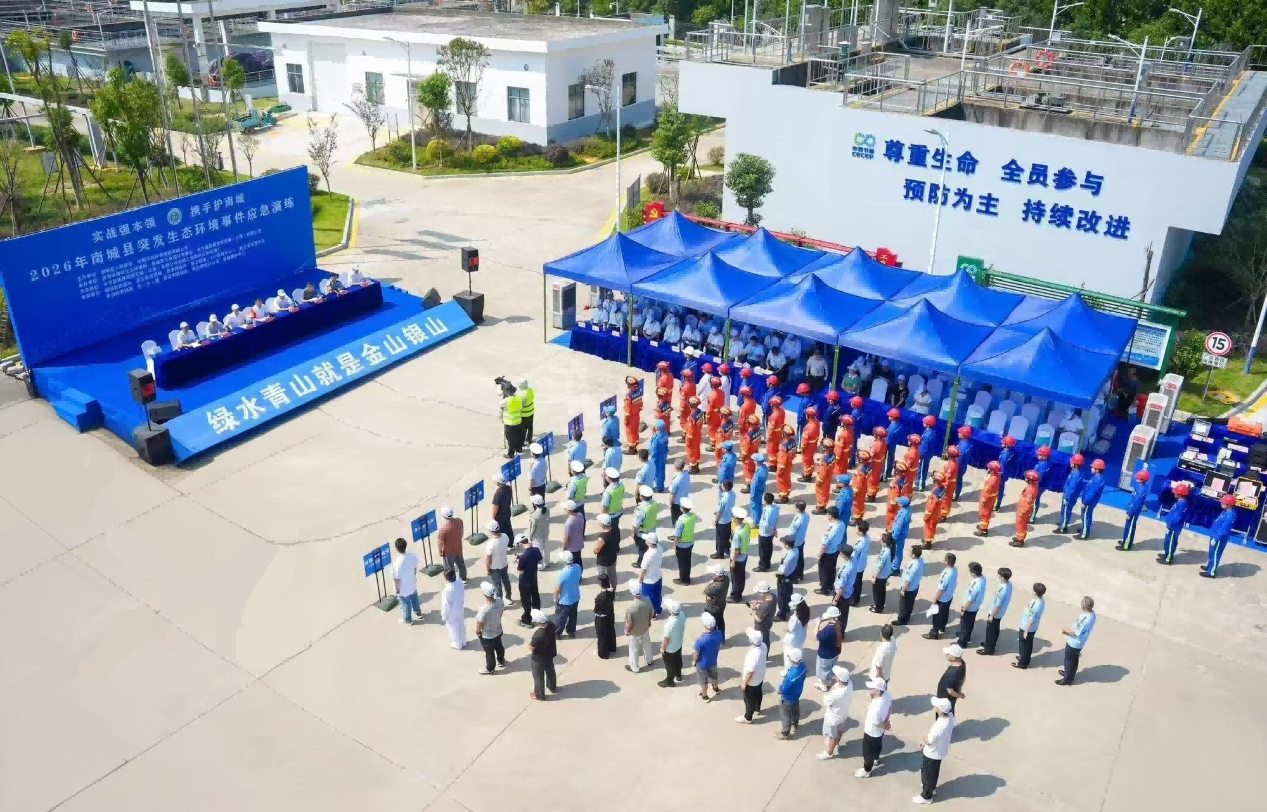
Du Le noted that the drill served as a practical exercise in preventing and mitigating ecological and environmental risks through government-enterprise coordination, as well as an important initiative to reinforce corporate responsibility for ecological and environmental protection and improve emergency response coordination between central state-owned enterprises and local governments. All units should firmly shoulder the responsibilities of central state-owned enterprises, proactively coordinate with governments at the provincial, municipal and county levels, continue to improve dedicated emergency response plans for ecological and environmental incidents, equip and strengthen professional emergency response teams, become deeply involved in local integrated ecological and environmental governance, continuously improve emergency management systems, strengthen the prevention and control of major environmental risks, and further build a robust ecological safety barrier based on government-enterprise coordination and joint prevention and control.
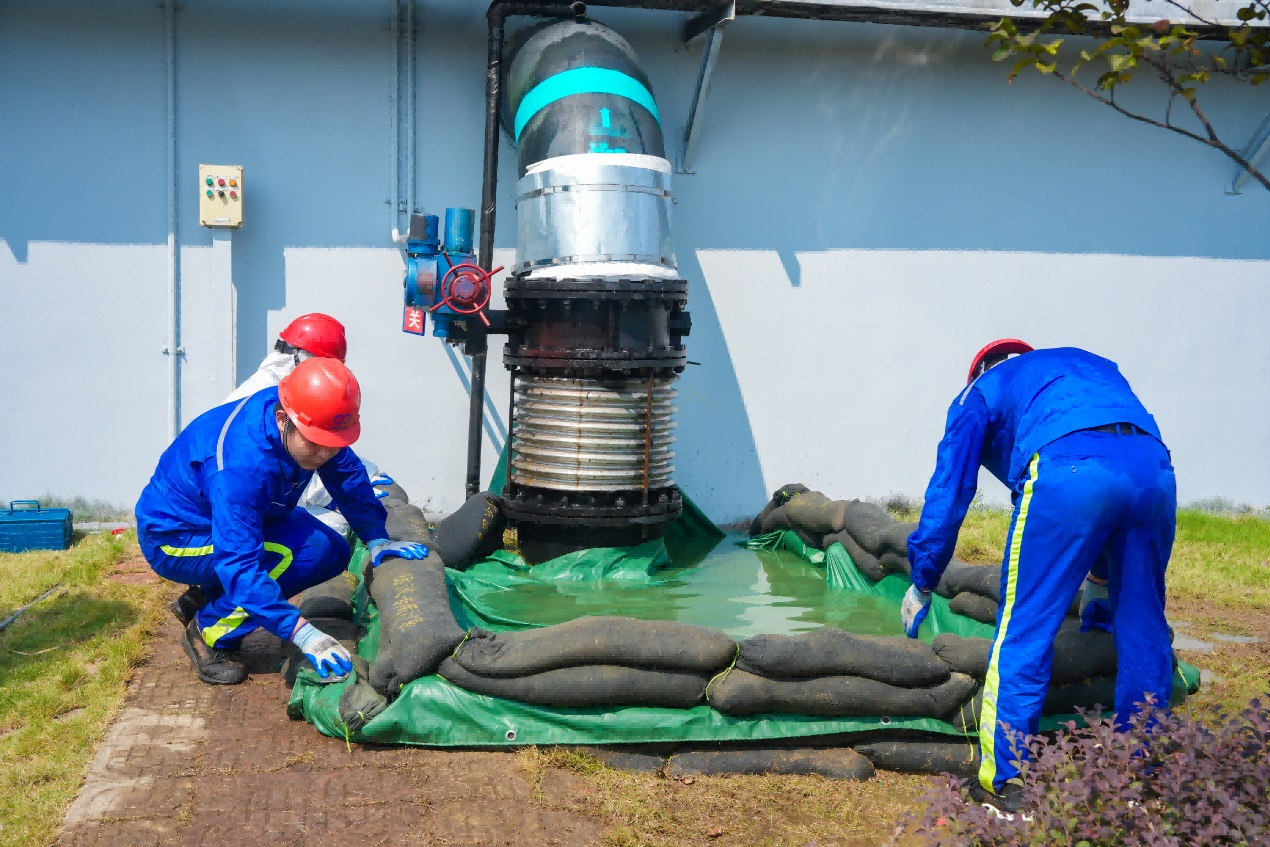
The drill closely reflected actual operating conditions on the production front line. With a scientifically designed and comprehensive process and a tense yet orderly pace, it simulated a series of cascading emergencies, including an inspection revealing excessive levels of pollutants in incoming water, followed by a pipeline rupture, wastewater overflow and personnel injuries. Participants carried out a full range of emergency response procedures, including on-site response, emergency monitoring, reporting through established channels, government-enterprise coordination, and emergency containment and blockage. The drill also featured a dedicated exercise on media and public opinion guidance in response to sudden ecological and environmental incidents, comprehensively simulating the entire response process, including information reporting, situation verification, formulation of unified messaging, on-site information release and media response. Group leaders participated in and guided key stages of the drill, effectively testing the practicality of the emergency response plans and achieving the expected objectives of strengthening emergency response teams and enhancing their capabilities.
Following the drill, the Group invited experts from the South China Institute of Environmental Science under the Ministry of Ecology and Environment to provide specialized training on environmental emergency management for water treatment enterprises. The training effectively addressed gaps in frontline management capabilities, enhanced the emergency response capacity of all employees, and promoted learning through drills and action through learning.
The event was conducted through a combination of on-site observation, livestreaming across the Nancheng County Government and the Group's online platforms, and simultaneous online and offline participation. More than 120 participants attended the event on site, including representatives from the Nancheng County Government Office, Emergency Management Office, Cyberspace Administration Office, Health Commission and Integrated Media Center, as well as relevant representatives from the Group's General Office, Safety and Environmental Protection Department and Publicity Department. Participants also included officials responsible for ecological and environmental protection, safety directors, heads of environmental protection departments, heads of publicity departments and business personnel from the Group's second-tier water business companies and key entities. More than 200 entities across the Group's system simultaneously observed and participated in the training online.


