
On August 2, the Symposium on Ecological Rural Revitalization in Ethnic Minority Areas during the 15th Five-Year Plan Period was held at the Xiangxi Building in Beijing. The event was jointly organized by the Beijing Liaison Office of the Xiangxi Prefecture Government and CECEP Eco-Product Development Research Center. Zhang Zhigang, former director-general of the Department of Common Development of the National Ethnic Affairs Commission, as well as representatives from Minzu University of China, China Foundation for Rural Development and other organizations attended the symposium. Participants discussed practical measures for advancing ecological rural revitalization in ethnic minority areas, focusing on protecting the ecological barrier in the Wuling Mountains and preserving the distinctive ethnic cultural heritage of Xiangxi.
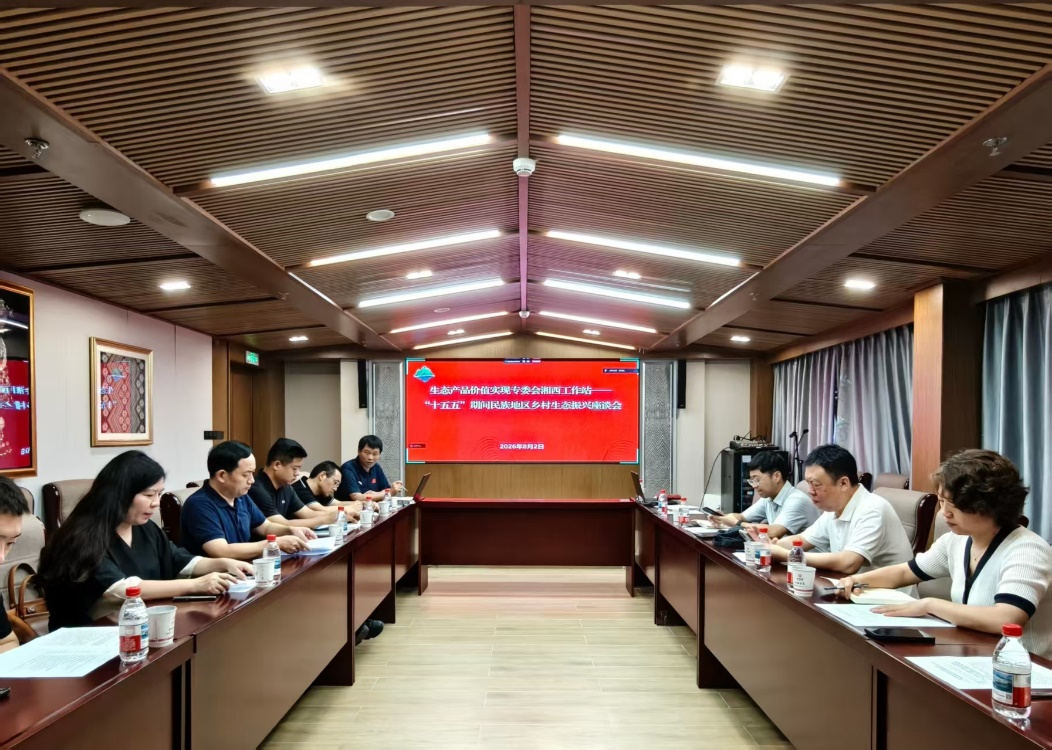
At the symposium, participants discussed the challenges and bottlenecks in ecological rural revitalization and explored ways to strengthen policy coordination, implement targeted initiatives and enhance cross-departmental collaboration, in line with the national 15th Five-Year Plan's requirements for developing an ecological civilization and advancing comprehensive rural revitalization. They called for efforts to overcome the barriers caused by fragmented policies and provide institutional support for local governments to incorporate the realization of the value of ecological products into their economic and social development plans.
Given Xiangxi's rich natural and cultural resources, experts at the symposium recommended leveraging the dual advantages of ecology and ethnic culture. They called for accelerating the development of geographical indication products and building regional public brands based on specialty products such as ponkans, Golden Tea and traditional Chinese medicinal herbs, as well as intangible cultural heritage resources such as Tujia brocade and Miao silverwork. They also recommended using a new media network to tell compelling stories about Xiangxi's ethnic cultures and ecological resources, address challenges including insufficient standardization and low market recognition of agricultural products, develop differentiated industries, avoid homogeneous competition in cultural tourism and agricultural products, and establish an ecological product evaluation and certification system tailored to local conditions. They called for linking certification results with green finance and government and corporate procurement to effectively increase the market premium of ecological products. They also advocated further integrating the development of ecological industries with the greening of industries, making full use of the resources available through targeted assistance from centrally administered state-owned enterprises, establishing an integrated platform for ecological product traceability and online exhibitions and sales, and leveraging social capital to encourage sustained, large-scale investment, thereby providing continued support for ecological rural revitalization in ethnic minority areas of the Wuling Mountains.
Going forward, CECEP Eco-Product Development Research Center will leverage the Xiangxi Workstation of the Special Committee on Realizing the Value of Ecological Products to actively advance pilot initiatives in ecological product value conversion, regional brand development and the establishment of long-term development mechanisms. It aims to develop a replicable and scalable model for ecological revitalization in ethnic minority areas of the Wuling Mountains, and help Xiangxi achieve coordinated progress in ecological conservation, industrial efficiency and income growth through the dual drivers of ecological and cultural development.


